
Generation of Computers

Updated: Aug 18, 2025
🖥️ Generations of Computers
Computers have evolved through different phases of technological advancements. These phases are called Generations of Computers. Each generation represents a significant leap in technology, speed, size, cost, and programming.
🔵 1st Generation (1940–1956) – Vacuum Tube Technology
🔹 Features:
Used vacuum tubes for circuitry and magnetic drums for memory.
Very large in size and consumed a lot of electricity.
Machine language (0s and 1s) was used for programming.
Very slow processing speed.
Generated a lot of heat, leading to frequent failures.
Input/output was through punched cards and paper tape.

🔹 Examples:
ENIAC (Electronic Numerical Integrator and Computer)
UNIVAC I (Universal Automatic Computer)
🟡 2nd Generation (1956–1963) – Transistor Technology
🔹 Features:
Used transistors instead of vacuum tubes.
Smaller in size, more reliable and energy-efficient.
Faster processing than the first generation.
Programming was done in assembly language.
Used magnetic core memory.

🔹 Examples:
IBM 1401
CDC 1604
IBM 7094
🟢 3rd Generation (1964–1971) – Integrated Circuits (IC)
🔹 Features:
Used Integrated Circuits (ICs), which combined multiple transistors on a single chip.
Much smaller, faster, more reliable, and cheaper than earlier generations.
Supported high-level languages like COBOL, FORTRAN.
Allowed multi-tasking and multi-programming.
The keyboard and monitor became standard I/O devices.

🔹 Examples:
IBM 360 Series
Honeywell 6000 Series
PDP (Programmed Data Processor)
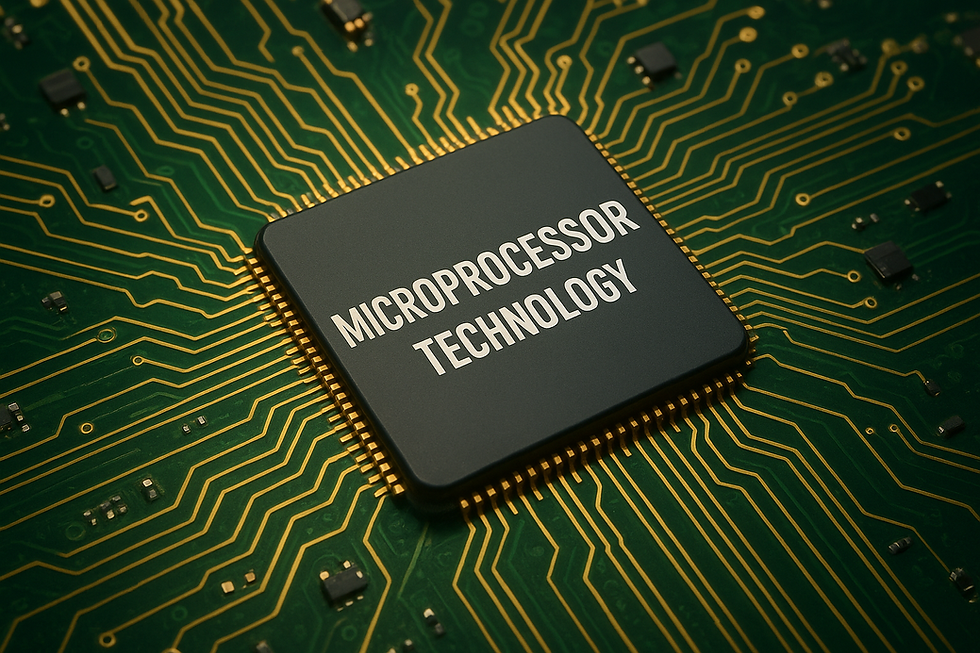
🔴 4th Generation (1971–Present) – Microprocessor Technology
🔹 Features:
Used Microprocessors – thousands of integrated circuits built onto a single silicon chip.
Introduction of personal computers (PCs).
Extremely fast and powerful.
Supported graphical user interfaces (GUI), mouse, and handheld devices.
High-level languages like C, C++, Python, etc., became widely used.
Development of networking, internet, and mobile computing.
🔹 Examples:
IBM PC
Apple Macintosh
Intel 4004, 8086, 8088
⚫ 5th Generation (Present and Beyond) – Artificial Intelligence (AI)
🔹 Features:
Based on Artificial Intelligence, Machine Learning, Quantum Computing, and Natural Language Processing.
Computers can think, learn, and make decisions.
Use of supercomputers, robotics, voice recognition, and cloud computing.
Focused on automation, smart technology, and human-computer interaction.

🔹 Examples:
AI Assistants (Siri, Alexa, Google Assistant)
IBM Watson
Quantum Computers (by Google, IBM)
📝 Comparison Table
Generation | Technology Used | Language Used | Speed & Size | Example |
1st (1940–1956) | Vacuum Tubes | Machine Language | Very slow, very big | ENIAC, UNIVAC |
2nd (1956–1963) | Transistors | Assembly Language | Faster, smaller | IBM 1401 |
3rd (1964–1971) | Integrated Circuits | High-Level (COBOL etc.) | Faster, more reliable | IBM 360 |
4th (1971–Now) | Microprocessors | C, C++, etc. | Very fast, compact | IBM PC, Apple Mac |
5th (Now–Future) | AI, Quantum Computing | AI, ML Languages | Ultra-fast, smart | Siri, IBM Watson |
✅ Conclusion
The Generations of Computers highlight how technology has evolved over time—from massive, slow machines to compact, intelligent systems. Each generation brought innovations that made computers faster, smaller, cheaper, more powerful, and more user-friendly. The future promises even more advanced systems with human-like intelligence.

Comments